Free PDF The Art of Loving (Classics of Personal Development), by Erich Fromm
By downloading this soft data publication The Art Of Loving (Classics Of Personal Development), By Erich Fromm in the on-line web link download, you are in the 1st step right to do. This website really supplies you simplicity of the best ways to get the finest book, from ideal vendor to the brand-new released book. You could discover much more books in this site by visiting every link that we give. Among the collections, The Art Of Loving (Classics Of Personal Development), By Erich Fromm is one of the very best collections to sell. So, the very first you obtain it, the initial you will get all favorable concerning this publication The Art Of Loving (Classics Of Personal Development), By Erich Fromm
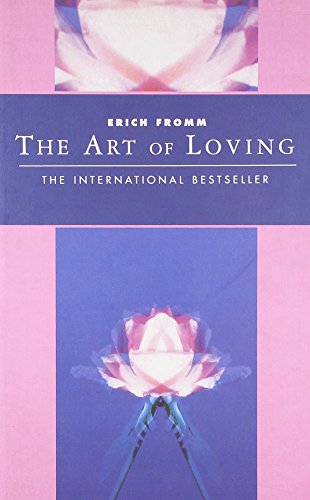
The Art of Loving (Classics of Personal Development), by Erich Fromm

Free PDF The Art of Loving (Classics of Personal Development), by Erich Fromm
The Art Of Loving (Classics Of Personal Development), By Erich Fromm. Provide us 5 mins as well as we will certainly reveal you the most effective book to review today. This is it, the The Art Of Loving (Classics Of Personal Development), By Erich Fromm that will be your finest option for better reading book. Your 5 times will certainly not spend thrown away by reading this web site. You could take the book as a resource to make far better concept. Referring guides The Art Of Loving (Classics Of Personal Development), By Erich Fromm that can be situated with your requirements is sometime challenging. However right here, this is so simple. You can discover the most effective point of book The Art Of Loving (Classics Of Personal Development), By Erich Fromm that you can check out.
Keep your way to be right here and also read this resource completed. You can appreciate browsing the book The Art Of Loving (Classics Of Personal Development), By Erich Fromm that you really refer to obtain. Right here, getting the soft file of the book The Art Of Loving (Classics Of Personal Development), By Erich Fromm can be done quickly by downloading and install in the web link page that we give below. Certainly, the The Art Of Loving (Classics Of Personal Development), By Erich Fromm will be your own faster. It's no need to wait for guide The Art Of Loving (Classics Of Personal Development), By Erich Fromm to obtain some days later on after buying. It's no have to go outside under the heats up at middle day to visit guide establishment.
This is a few of the benefits to take when being the member and obtain the book The Art Of Loving (Classics Of Personal Development), By Erich Fromm here. Still ask exactly what's different of the various other site? We give the hundreds titles that are produced by recommended authors and also publishers, all over the world. The link to purchase and also download and install The Art Of Loving (Classics Of Personal Development), By Erich Fromm is also quite simple. You may not find the challenging site that order to do even more. So, the means for you to get this The Art Of Loving (Classics Of Personal Development), By Erich Fromm will be so easy, will not you?
Based on the The Art Of Loving (Classics Of Personal Development), By Erich Fromm information that we provide, you might not be so confused to be below as well as to be member. Obtain currently the soft data of this book The Art Of Loving (Classics Of Personal Development), By Erich Fromm and also save it to be all yours. You conserving can lead you to stimulate the ease of you in reading this book The Art Of Loving (Classics Of Personal Development), By Erich Fromm Also this is kinds of soft documents. You could truly make better possibility to get this The Art Of Loving (Classics Of Personal Development), By Erich Fromm as the suggested book to read.
Since it was first published " The Art of Loving" has become a classic, inspiring thousands of people with its clarity and power. Erich Fromm, the renowned psychoanalyst, sees love as the ultimate need and desire of all human beings. In this book, he discusses every aspect of the subject: romantic love, the love of parents for children, brotherly love, erotic love, self-love and the love of God or the divine. He looks at the theory of love as it appears throughout the cultures of the world and at the practice, how we show or fail to show love to one another. Love is an art, which we need to develop and practice in order to find true commitment. We need to find it, individually and as a society as a whole. Erich Fromm is one of the major figures in the field of psychoanalysis. He devoted himself to consultant psychology and theoretical investigation for many years. He was the author of numerous books, including " Fear of Freedom" and "Psychoanalysis and Zen", before his death in 1980.
- Sales Rank: #9112909 in Books
- Brand: imusti
- Published on: 1995-07-10
- Original language: English
- Number of items: 1
- Dimensions: 8.50" h x .31" w x 5.31" l, 1.10 pounds
- Binding: Paperback
- 112 pages
- Thorsons AUDIO
Review
"Erich Fromm is both a psychologist of penetration and a writer of ability. His book is one of dignity and candor, of practicality and precision."--"Chicago Tribune"Every line is packed with common sense, compassion, and realism."--"Fortune
From the Back Cover
A classic in its own time...The original self-help treatise that has inspired countless numbers of men and women throughout the world. Learn how love can release hidden potential and become life's most exhilarating experience. In this fresh and candid work, renowned psychoanalyst Erich Fromm guides you in developing your capacity for love in all its aspectsromantic love, love of parents for children, brotherly love, erotic love, self-love, and love of God. Read by a professional narrator, this powerful rendition of the book shows how you can alter the whole course of your life. The Art of Loving has been continuously in publication since 1956 and has sold over 6 million copies. It is considered the seminal work in developing the psychology of person growth.
About the Author
Erich Fromm is one of the major figures in the field of psychoanalysis. He devoted himself to consultant psychology and theoretical investigation for many years.
Most helpful customer reviews
11 of 11 people found the following review helpful.
Genius
By Kaan
I'm luckier(in a materialistic sense) than %99 of the population yet I haven't been happy for a long long time. I've known the steps I should take for a happier life for years but I haven't been able to take those steps. Simply being aware of the way to a happier life was not enough to overcome my educated awareness of the insignificance of my existence. The concept of rational faith mentioned in the book brought about a certain kind of enlightenment which enables me to see things differently and urges me to work on my willpower. The last two chapters should be read by everyone capable of understanding it. Do not let the intricately worded section on paradoxical logic discourage you from reading those last chapters, which is in my opinion the best part of the book.
Also, how he manages to work religion into this book without giving away his atheism is remarkable. Though it leaks through, a religious person would not be offended at all. Living god as opposed to believing it is a concept that is most probably contributed by his intellectual(!)(read the book to understand the !) endeavors in zen buddhism which amplifies the depth of his analysis greatly.
7 of 7 people found the following review helpful.
This book is full of wonderful insights. I probably highlighted half of it
By Nick
This book is full of wonderful insights. I probably highlighted half of it!
It never occurred to me before that selfishness might be tied to a lack of self-love. Interesting!
This book made me question the character of many of my relationships. I became aware that I rarely truly love. This is something that saddened me but is important to realize. Hopefully, I will one day become capable of real love.
One thing that I didn't care for was the part about economics from a Marxist perspective. I realize that Fromm was part of the Frankfurt School/critical theory scene, and they were all heavily influenced by Marx, but still, I find that this stuff detracted from what he had to say about love.
9 of 9 people found the following review helpful.
1950's To Today, Still Relevant.
By M. DeKalb
Published in 1956, the entirety of this work postulates love as an art, one which requires practice and for it to be successful a certain degree of attained maturity. As an art it requires knowledge and effort. Fromm makes allusions to modern cultures starvation for love - `trashy songs', happy and unhappy cinema - and states that most people assume it is something we `fall into' as opposed to the more realistic `standing in' and that a `mature love is union under the condition of preserving one's integrity, one's individuality.' (265).
This is certainly a difficult read if you're not prepared, if you're not to some degree `mature' as Fromm posits. Also of notable difficulty are Fromm's concern with machination, automation and the anologies he draws from the capitalistic market unto man. It's easy to see how the two correlate, and I do feel it's an apt description, but I could also see how people unobservant to how our society functions might miss the parallels. Fromm is also very concerned with parables of the religious sort, which may deter some people from investing in the work as a whole, however, remember this is about `love', first and foremost. Something we all need to remain cognizant of and practice daily.
POTENTIAL SPOILERS:
In popular cultural belief being lovable means an admixture between being popular and having sex appeal. But because love requires a mastery of theory and then mastery of practice it takes much work and resultantly, many failures. The third part of love, after theory and practice, is that it must be a matter of utmost concern. It requires devotion to order its success as an art. Of our culture Fromm states `in spite of the deep-seated craving for love, almost everything else is considered to be more important than love' (93). The ultimate goal of love is to overcome man's separateness from the rest of the world as `the deepest need of man, then, is the need to overcome his separateness, to leave the prison of his aloneness.' (127) Fromm also speaks about relevant psychiatric issues and drug abuses that stem from too grand a sense of isolation from fellow man and the desire, more often than not, for conformity (read `Escape from Freedom'). However, aside from connections to the world through work, play, forced adherence to societal rules, or adopting the herd mentality, `the full answer lies in the achievement of interpersonal union, of fusion with another person, in love.' (232).
Object vs. function - most Western culture sees love as easy, it's the object of love which is difficult, and often transient. The true function of love is meant to be separate from the object, for a person is not a thing as we see `things' in the Western world. Because of this love is treated the same as commodities on the market - buying into the best available option, then upgrading when the time is right.
Persons who `fall in love' and mistake this feeling for love, gradually begin to tire of the person and seek another such experience which they hope will endure, of this Fromm says `this type of love is by its very nature not lasting.' (74) Love is an activity, not a passive affect and it is `primarily giving, not receiving.' (286).
Prerequisites of maintaining love are a capacity to love one's neighbor, true humility, courage, faith and discipline. To these are the important practicable concepts of care, responsibility, respect and knowledge. Love is one path which can be utilized to know thyself, to know some of the secrets of the individual and thereby the secrets of humankind.
At the end of section one Fromm takes a shot at Freud for being too shallow, and for not investigating the occurrence of sexual-polarity present in both genders.
Fromm covers:
Love between parent and child - key to this notion are the ideas that a mother's love is unconditional and cannot be earned, if it need be earned then it is already gone. A child is loved because they are, because they exist, not because of any potentiality. This is part of a child's development until about the age of 10, at which point they transition to practice loving instead of just being loved. Fromm also differentiates the different types, paternal (training in the world, love on condition, `deserved' love) and maternal (again, unwarranted, unconditional love). An interesting postulate arises, that of `milk and honey' as it relates to the promised land (yes, Fromm gets quite theological at times). `Milk' is to represent the care and affirmation (a mother's milk) and `honey' is to represent the sweetness of life, the good feelings toward the world, an unjaded perspective, a happiness wrought from being alive.
Brotherly love - love that is given to the whole of mankind, for we are all in this struggle together.
Erotic love - that between two sexually exclusive partners, `it is also perhaps the most deceptive form of love there is.' (661) Most often after a stranger has become known and the `falling in love' phase is over, there is nothing further to learn and the relationship sputters out. For most the intimacy remains only in sexual contact. Erotic love `is exclusive only in the sense that I can fuse myself fully and intensely with one person only.' (693) It's sole premise exists in `that I love from the essence of my being - and experience the other person in the essence of his or her being.' (696) Loving a single person in this manner is a choice, a judgment and a promise, and because of the highly differentiated aspects between certain individuals and because of this Fromm states that an individual is neither wrong nor right in maintaining or dissolving a relationship that presents as unsuccessful.
Self-love - This is not to be confused with egoism or narcissism. To adequately love anybody, we must also and foremost love ourselves. It is not a crime to do so and in fact, if we don't love ourselves we are completely incapable of loving anybody else maturely - `love toward themselves will be found in all those who are capable of loving others.' (738)
Love of God - Fromm differentiates between the matriarchical and patriarchical forms of religion, with the matriarchy coming first. This again references the types of love each God would distribute toward his `children'. Fromm himself postulates that God is a non-interventionalist, and that most mature people would see it this way. He also delves into the paradoxical logic of being and not being at the same instance, an impossibility using rational, stereotypical logic. Most importantly, regarding religion and love in general - `a knowledge not in right though but in right action' is the way in which to determine all proper motive. In our Western culture, belief in God is a thought process, much less an action process.
Section III: The Disintegration of Love in the Western Society
Further elaborates upon the notion of love as a commodity which can be exchanged and traded much like current market trends. Fromm also touches upon the general disconcertion people have toward being alone, but failing to realize that from this place, only, can they truly love another person. Fromm also makes sure to point out that sex IS NOT love, nor is viewing a relationship as `team-work'. Disipline, concentration and patience and a great sense of humility are necessary here, as in love with all mankind.
Most importantly all of this practice requires faith. The ability to step outside yourself, release your story and just believe, blindly... very hard to do, must needs practice, hence love surely is - an art.
Quotes:
`There is hardly any activity, any enterprise, which is started with such tremendous hopes and expectations, and yet, which fails so regularly, as love.' (79)
`Love is the active concern for the life and the growth of that which we love. Where this active concern is lacking, there is no love.' (338)
`One loves that for which one labors, and one labors for that which one loves.' (349)
`Mature love says: I need you because I love you.' (514).
`If I truly love on person I love all persons. I love the world, I love life. If I can say to somebody else, "I love you". (584)
`One other frequent error must be mentioned here. The illusion, namely, that love means necessarily the absence of conflict.' (1255)
`Love, experienced thus, is a constant challenge; it is not a resting place, but a moving, growing, working together; even whether there is harmony or conflict, joy or sadness, is secondary to the fundamental fact that two people experience themselves from the essence of their existence' (1265)
The Art of Loving (Classics of Personal Development), by Erich Fromm PDF
The Art of Loving (Classics of Personal Development), by Erich Fromm EPub
The Art of Loving (Classics of Personal Development), by Erich Fromm Doc
The Art of Loving (Classics of Personal Development), by Erich Fromm iBooks
The Art of Loving (Classics of Personal Development), by Erich Fromm rtf
The Art of Loving (Classics of Personal Development), by Erich Fromm Mobipocket
The Art of Loving (Classics of Personal Development), by Erich Fromm Kindle

Tidak ada komentar:
Posting Komentar